


Clear Accent Academy
World traveler
Coach Seven
Texas-born
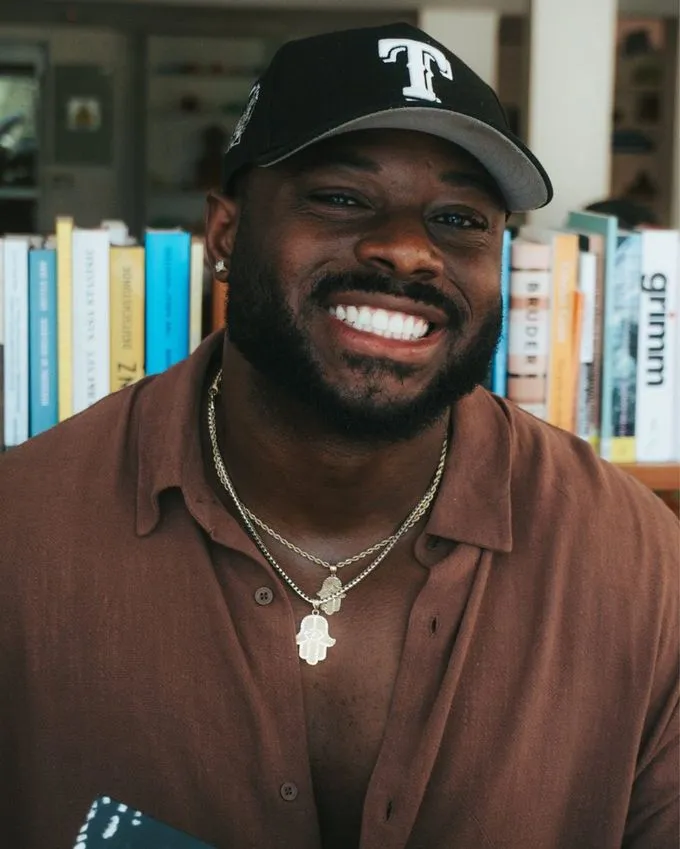
Coach Seven, portrait
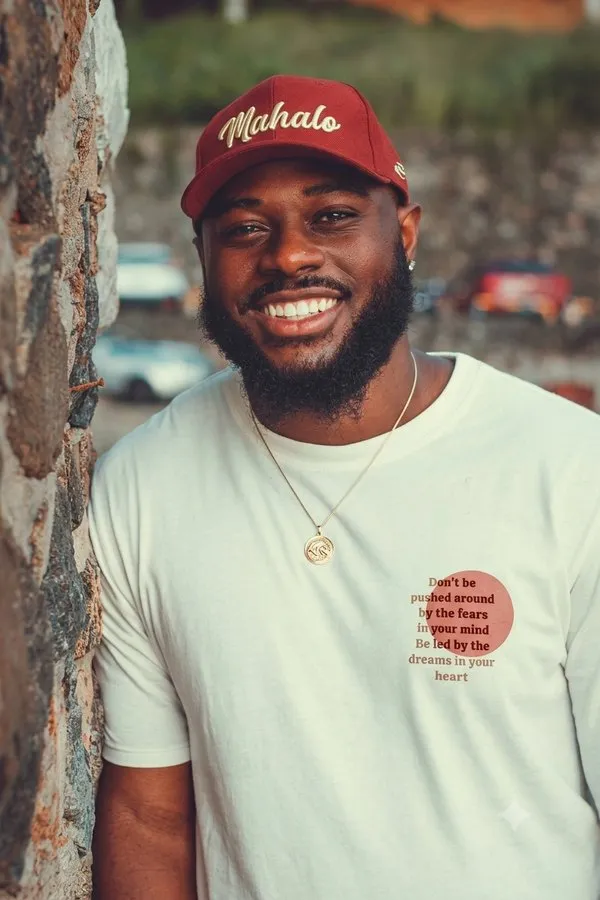
Coach Seven with a giraffe
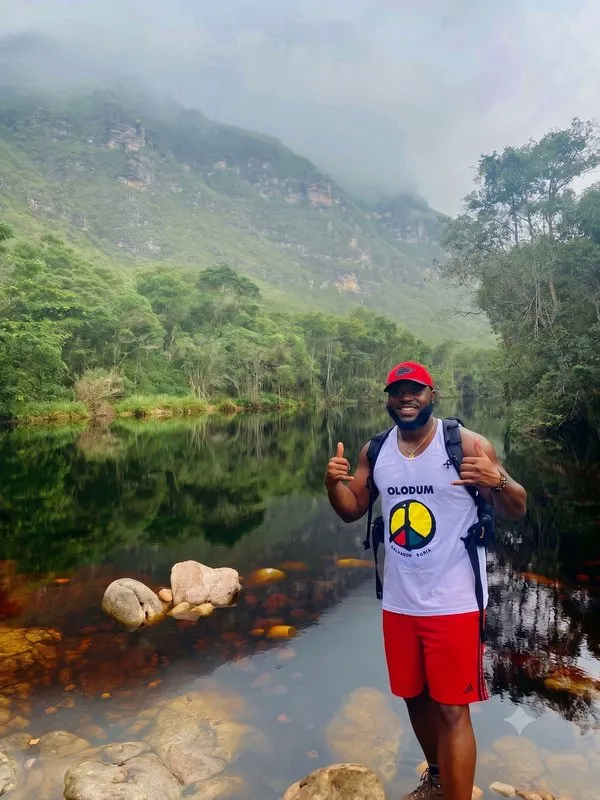
Coach Seven hiking
Coach Seven in Rio
Coach Seven traveling
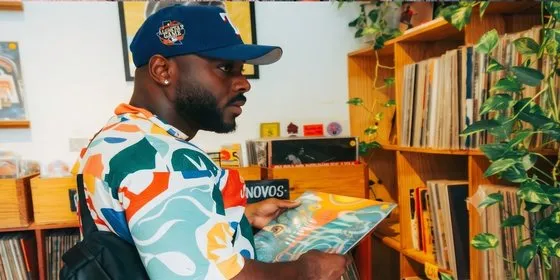
Coach Seven record shopping
/ about /

Being understood and sounding confident are two different things. I coach non-native professionals on the second one.

I'm Seven Jenkins. Most people call me Coach Seven — and that name is a pronunciation mistake somebody made about me, which is either irony or destiny depending on your mood.

Everyone's too polite to correct you. That's the whole reason I do this.

Seven years coaching English and communication. Born and raised in Texas — but I've traveled the world, and everywhere I go I fall more in love with different languages and cultures. That's exactly why I do this.

I've already helped thousands of people find their voice in English — and I'm just getting started. The mission is to help millions. I fix what nobody else catches. And I don't miss.

Book a free lesson
10 years
in corporate America, at a Fortune 500 company
7 years
coaching non-native professionals full time
30+ countries
thousands of students, mostly Brazil, Latin America and Europe
Austin, Texas
working across every time zone in between
/ why they call me seven /

Why they call me Seven

My name is Tevin.

The first time I tried to introduce myself to a group of Brazilians, one of them stopped me. "Seven?"

No — Tevin. I said it again. Slower. He tilted his head. "Seven."

And here's the thing: he wasn't being difficult. The sound I was making genuinely wasn't landing, and no amount of repeating it was going to fix that, because repeating a thing louder has never fixed a thing in the history of language.

Then he turned around and introduced me to twelve people. "This is Seven."

Twelve new faces. I was still trying to remember their names. What was I going to do — stop the whole room and correct him?

So I was Seven. And I've been Seven ever since.

I built a career on this. A sound didn't land, and the person in front of me couldn't tell me why, only that it hadn't. That's the exact gap my students live in every day — except for them it isn't a nickname, it's a meeting where their best idea went unheard.

I got a name out of it. They get overlooked.

I know which side of that I'd rather be on, which is why I do this.

/ before this /

Before this

I grew up in Texas, and Texas has always been full of people who came from somewhere else.

So I watched it happen constantly. Someone would be sharp, capable, often more qualified than the person they were talking to — and the room would decide something about them inside four seconds because of how a sentence came out. Not what they said. How it landed.

And this was before any of the tools existed. No ChatGPT, no live translation, no app in your pocket. If you couldn't make yourself understood, you were on your own in the room.

I had two things going for me: patience, and a genuine love of how language works. So I'd stay in those conversations longer than most people would. It never felt like charity. It felt like the more interesting conversation.

Then I went and did the sensible thing.

Ten years in corporate America. Out of college I chased the Fortune 500 dream and caught it — I spent a decade at one of the companies in Warren Buffett's portfolio. It was a good job. I was good at it.

And in ten years inside that building, I watched the same thing I'd seen growing up, except now it had a salary attached. Brilliant people getting talked over. Ideas dying in the gap between having them and saying them. Promotions going to whoever explained themselves fastest, which is not the same thing as whoever was right.

I've always been a builder — I've started things my whole life. So eventually I left and built this instead.

Seven years of doing it full time, thousands of students, more than thirty countries.

/ i've been the one translating /

I've been the one translating

Here's the question nobody asks me out loud: what does an American from Texas know about this?

I learned Portuguese. And I chose it precisely because it scared me.

I knew I wanted to live in another country. I knew I wanted to do something genuinely difficult rather than something that would look good on a shelf. And Portuguese frightened me — it's spoken in a handful of places scattered across the world, it sounded like nothing I'd ever produced with my mouth, and I honestly didn't know whether I could do it.

So I went in headfirst. No safety net, no plan B, no waiting until I felt ready.

Which means I know the specific feeling of having the sentence fully assembled in your head and watching the moment to say it pass. I know the tiredness of a conversation where you understood everything and contributed nothing. I know what it costs to be the least articulate person in a room when you're not the least intelligent one.

So when a student tells me they froze, I'm not sympathizing from the outside.

And here's what it actually buys you. When a Portuguese habit is what's breaking your English, I know which one it is. Not that it sounds off — which one, and why, and what to do instead. Most coaches can hear that something's wrong. Fewer can tell you where it came from.

We won't run your sessions in Portuguese. That's not what you're paying for. But I'm not guessing at what your first language is doing to your second.

/ why "coach" and not "teacher" /

Why "coach" and not "teacher"

Teachers deliver a syllabus. That's not a criticism — it's the job, and at the beginning it's exactly the right job. Somebody has to hand you the grammar.

But you've had that. Five years of it, maybe fifteen. And you're still here, still hesitating, still rewriting the sentence before it leaves your mouth. Another syllabus is not what's missing.

What's missing is someone watching you perform and telling you what they see. That's coaching. It's what happens in a gym, in a studio, on a pitch — you do the thing, someone who knows more than you says no, again, and here's why. It is the only way anyone has ever gotten good at a physical skill.

Speaking is a physical skill. I coach it like one.

/ why i don't take beginners /

Why I don't take beginners

I turn away work every month, and I want to be honest about why, because it isn't that I look down on beginners. I like beginners.

They're fun. They're honest — when a beginner is confused, they tell you, immediately, which is more than most adults manage. And they remind me of myself with Portuguese, back when every sentence was a small act of courage.

I stepped away for one reason: I'm worth ten or twenty times more to someone who already has the language.

It isn't close. With a beginner I'm doing what a hundred good teachers could do. With someone at your level — someone who already functions in English, whose remaining problems are invisible to everyone around them because everyone around them says your English is great and means it — I'm doing something almost nobody does.

That's the last stretch. It's hard to sell and harder to do, and it's where I'm actually useful.

If you can read this page comfortably, you're who I work with. If you can't yet, come back. I'll still be here.

/ the correction i still think about /

The correction I still think about

Most people come to me about their accent. Almost nobody comes to me about their word choice, and word choice is doing far more damage.

The words you pick decide how hard your message lands and what people conclude about you — exactly the way an accent does, except nobody ever mentions it, so you never get the chance to fix it.

And here's the part that changes things: native speakers are listening for a very short list. Confidence in English isn't a mood or a personality trait, and it isn't fluency either. It's a handful of specific, learnable signals — and once you know what they are, you can't unhear them.

That's most of what I do. Not making you sound American. Making you land.

/ about the other name /

About the other name

The name says clear. It doesn't say gone.

I'm not going to make you sound American, and I'd argue with you if you asked me to. Your accent carries where you're from, and there's nothing wrong with that in a meeting, a courtroom or a keynote.

What matters is effort — whether the person listening has to work to follow you. Where your accent costs them effort, we fix that specific thing. Where it doesn't, we leave it alone and spend the hour on something that's actually holding you back.

Clear, not erased. I've got a name built out of a mispronunciation. I'm not about to take yours.

/ what i'm like to work with /

What I'm like to work with

I'll tell you the truth. That's the entire product. If your pronunciation is fine and your real problem is that you apologize before every sentence, I'll say so — even though you came here about pronunciation.

I won't embarrass you. Being corrected constantly and being humiliated are not the same thing, and I've never confused them. You'll choose on day one how you want to be corrected, and I'll do it that way.

The sessions are fun. Not because learning has to be entertaining, but because you'll do the work you enjoy and skip the work you don't. Seven years of drills and games are built on that.

I'll tell you when to stop. If we've done the work and you're where you wanted to be, I'll say so. I'd rather lose the client than bill someone for a problem that's already solved.

/ who i've worked with /

Who I've worked with

Over seven years I've coached thousands of people across more than thirty countries — executives, founders, lawyers, doctors, and public figures whose names I don't publish, for reasons they'd understand.

More on who I've worked with →
/ where i am and how this works /

Where I am and how this works

Based in Austin, Texas. Everything runs online, on Google Meet. Most of my students are in Brazil, Latin America and Europe.

Live sessions: The Unscripted Room — Wednesdays, 8PM Barcelona and 8PM São Paulo. English Maxxing — Saturdays, 10AM Texas.

I speak Portuguese. Sessions run in English — that's the point — but I'm not guessing at what your first language is doing.

Reach me on WhatsApp. It's fastest and it's how I'd rather talk. Email works too.

The fastest way to find out if we'd work well together

Twenty minutes. You talk, I listen, and at the end I tell you what I heard. If none of my programs fit, I'll say so and point you somewhere better.

Book a free 20-minute lesson